Auckland: Rubedo Press, 2026
Softcover | 5.06 x 7.8 | Illustrated | B&W | 150 pages
$32.00
Price listed in New Zealand Dollars.
Approximate price in other currencies:
GBP £15.00 , EU: € 16.00, USD $17.00
Price listed in New Zealand Dollars.
Approximate price in other currencies:
GBP £15.00 | EU € 16.00 | USD $17.00
Please note that your order will be processed in New Zealand Dollars, but you will only be charged the equivalent amount in your own currency. The Rubedo Press shop is not set up to show converted rates at any point in the transaction. The prices listed above are therefore only given as an approximation, and may not reflect current foreign exchange rates.
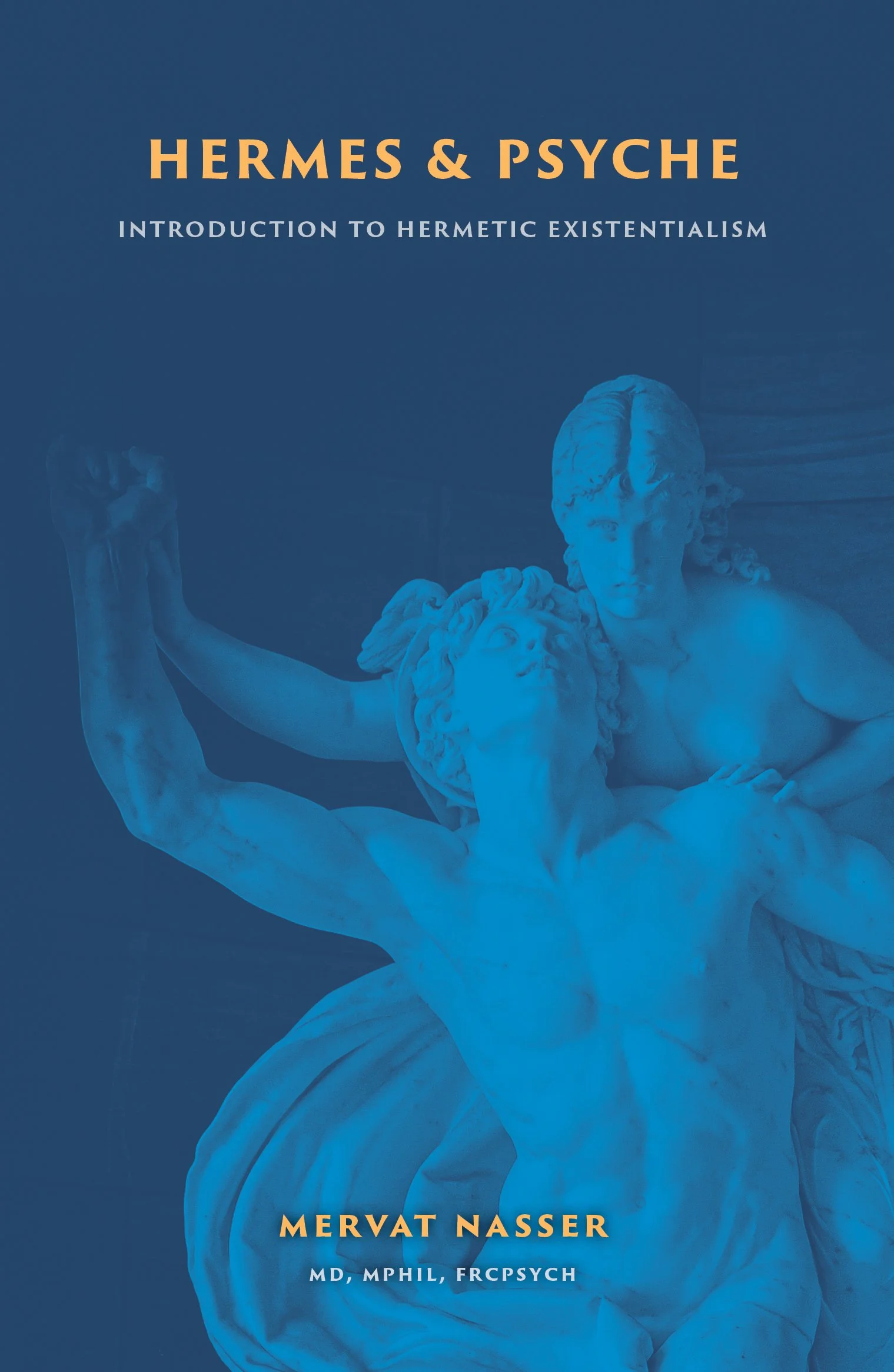
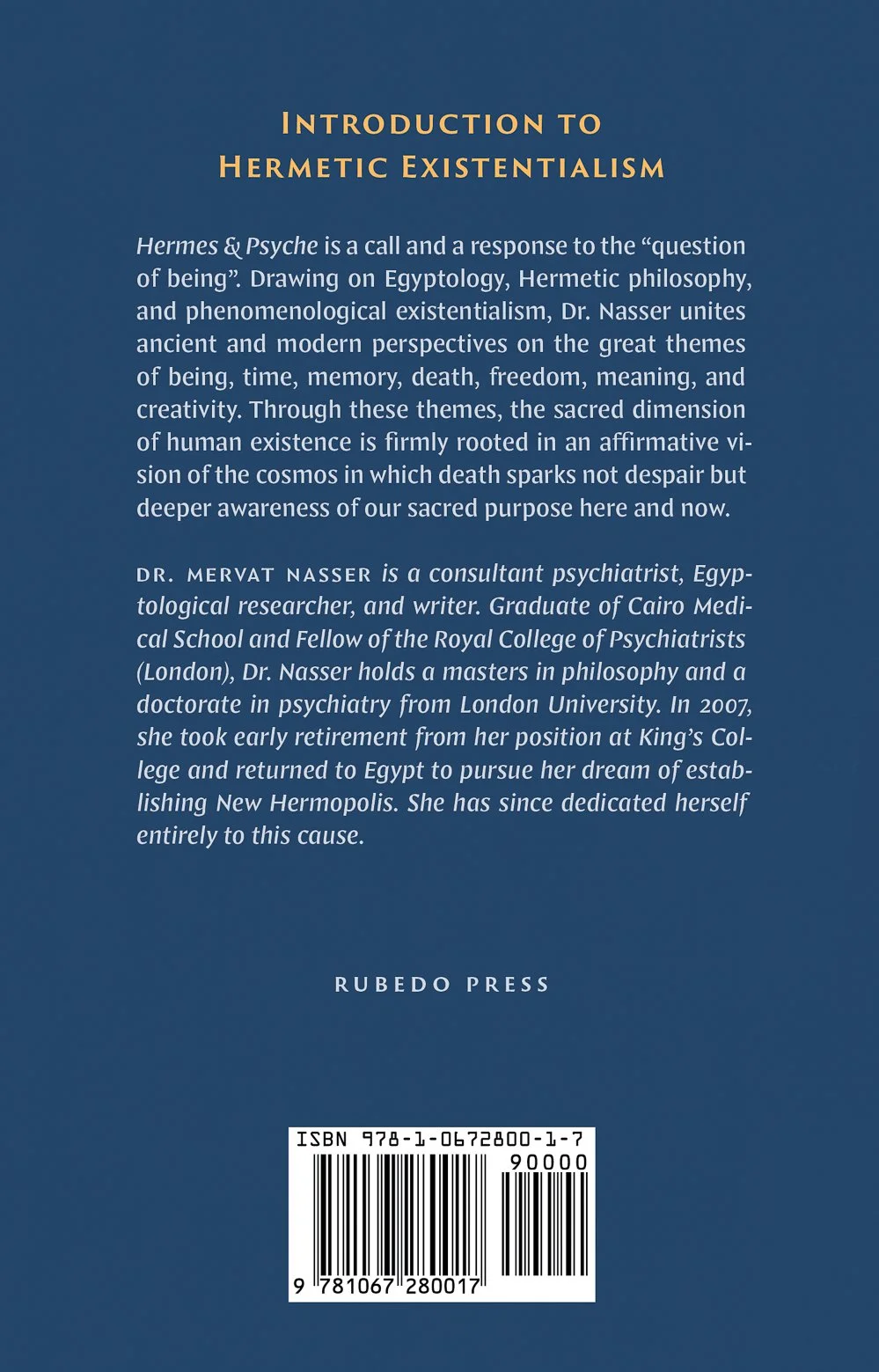
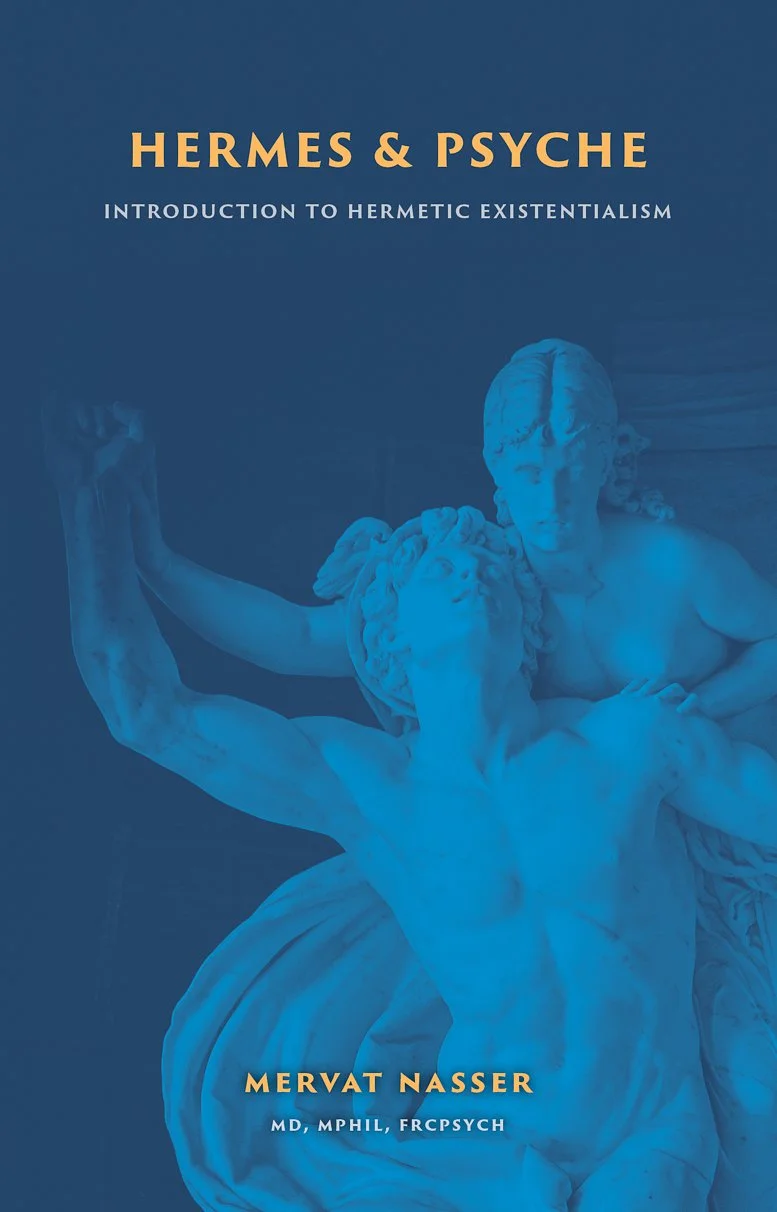
Hermes & Psyche
Introduction to Hermetic Existentialism
Mervat Nasser, M.D.
Hermes & Psyche is a call and a response to the Heideggerian “question of being” (Frage des Seins). Drawing on Egyptology, Hermetic philosophy, and phenomenological existentialism, Dr. Nasser brings together ancient and modern perspectives on the great philosophical themes of being, time, memory, death, freedom, meaning, and creativity. Particular emphasis is placed on the Egyptian principle of Ma’at (truth, alētheia), not as a measure against which the soul is judged in the afterlife, but as a modality of living authenticity. Here, the sacred dimension of human existence is firmly rooted in an affirmative vision of the cosmos in which death sparks not despair but deeper awareness of our sacred purpose here and now.
From the Introduction
“In a famous interview with Der Spiegel, released posthumously in 1976, Martin Heidegger voiced a grave and prophetic anxiety about the future he saw approaching: an age marked by the annihilation of spirit and the progressive oblivion of “being” (Dasein) under the combined weight of materialism and technological domination. Today, his forebodings resonate with unsettling clarity. We inhabit a world that is hyperconnected and yet profoundly isolated, intoxicated by an illusory sense of power and freedom of choice while, in reality, we are increasingly reduced to consumers, exploitable resources, and data. In response to this predicament, Heidegger insisted that no technical or political solution would suffice. The only possible answer, he argued, lies in a radical rediscovery of the sacred dimension—the forgotten ground of human existence itself. What is required of us is a renewed capacity to respond to the call of being: an inward path that seeks to decipher the imprint of the eternal within the depths of the human soul”.
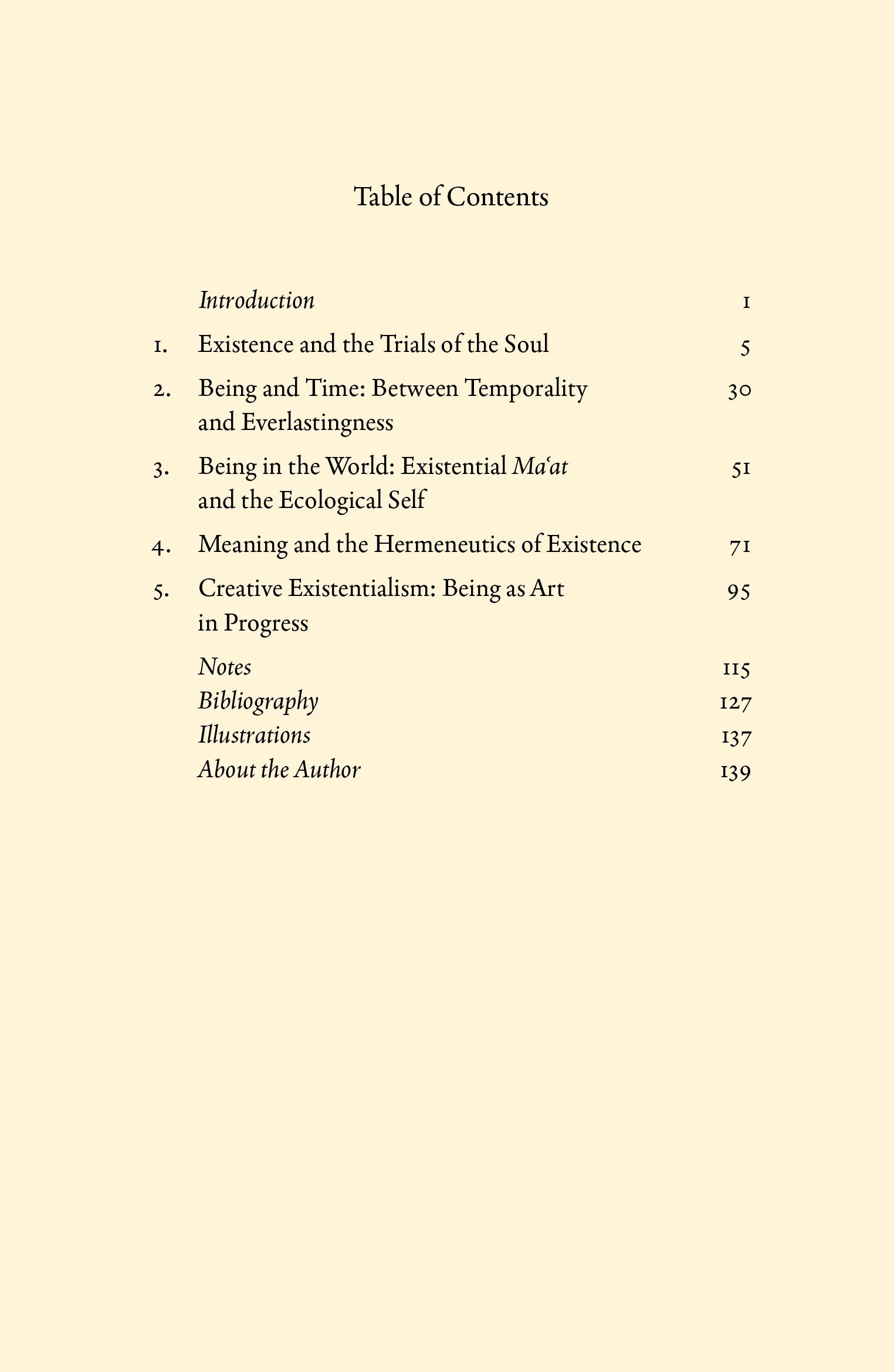
Table of Contents
Introduction
1. Existence and the Trials of the Soul
Psyche and the Golden Ass
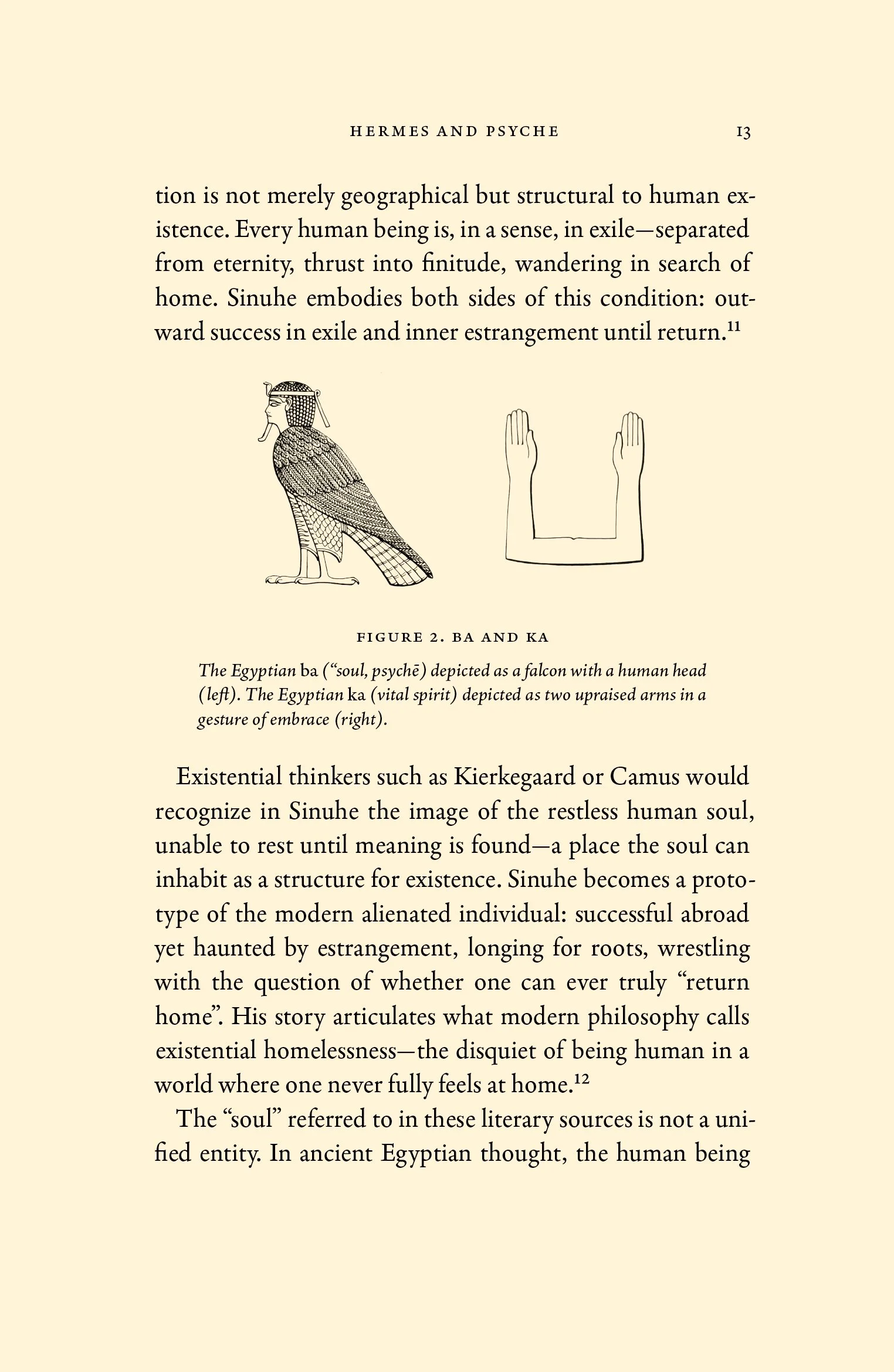
The Soul in Ancient Egyptian Thought
The Way of Hermes
The Gnostic Journey of the Soul and the Salvific Power of Knowledge
2. Being and Time: Between Temporality and Everlastingness
Time and Eternity
Being-toward-death, Being-toward-eternity
The Egyptians’ Way of Inserting Life into Death
Resistance to Annihilation Through Authentic Existence
Mastering the Craft of Permanence: Culture as a Counterworld to Death
3. Being in the World: The Existential Ma‘at and the Ecological Self
The Nature of the Relational Self
Being-in-Ma‘at: Existential Dimensions
Ma‘at as Existential Continuity
4. Meaning and the Hermeneutics of Existence
Being and Interpretation
Thoth-Hermes: The Hermeneutic God
Umberto Eco: The Hermetic Theatre of Language and Existetnial Semiosis
Ricoeur’s Hermetic-Hermeneutic Narrative of Self
Viktor Frankl and the Existential Search for Meaning
From Existential Hermeneutics to the Digital Condition
Post-Humanism: Polemics of Interpretive Existence
Toward a New Hermeneutics of Existence
5. Creative Existentialism: Being as Art in Progress
Egyptian Existential Creativity: Co-Creation with the Divine
Creativity from Ancient Egypt and Hermetic Man to Renaissance Humanism
The Creative Inauguration of Existence
Hermopolis: The Space where Beauty enters into Being
The Triumph of the Soul: Remaining in the Game
Notes
Bibliography
Illustrations
About the Author
About the Author
Dr. Mervat Nasser (MD, MPhil, FRCPsych) is a consultant psychiatrist, researcher in Egyptology, and writer. Graduate of Cairo Medical School and fellow of the Royal College of Psychiatrists (London), Dr. Nasser holds a masters in philosophy and a doctorate in psychiatry from London University. She also has two diplomas in moral philosophy and the history of medicine. Having served as an academic and psychiatrist in England from 1977–2007, her clinical practice focused on general adult psychiatry with a special interest in the field of culture and mental health. She has a special interest in theories of education and integrative models of teaching, which are reflected in her her work as a writer, academic, and clinical tutor.
She has written psychological and philosophical commentaries on ancient Egyptian thought in Arabic, collected in the book Why Did Horus Lose His Eye: A New Reading of Ancient Egyptian Thought. She has also written several books addressed to the young reader, including an award-winning illustrated children’s series. In 2007, Mervat took early retirement from her job as consultant psychiatrist and senior lecturer at King’s College and returned to Egypt to pursue her dream of establishing the New Hermopolis. She has since dedicated herself entirely to this cause. In 2019, she published The Path to the New Hermopolis: The History, Philosophy, and Future of the City of Hermes through Rubedo Press.